
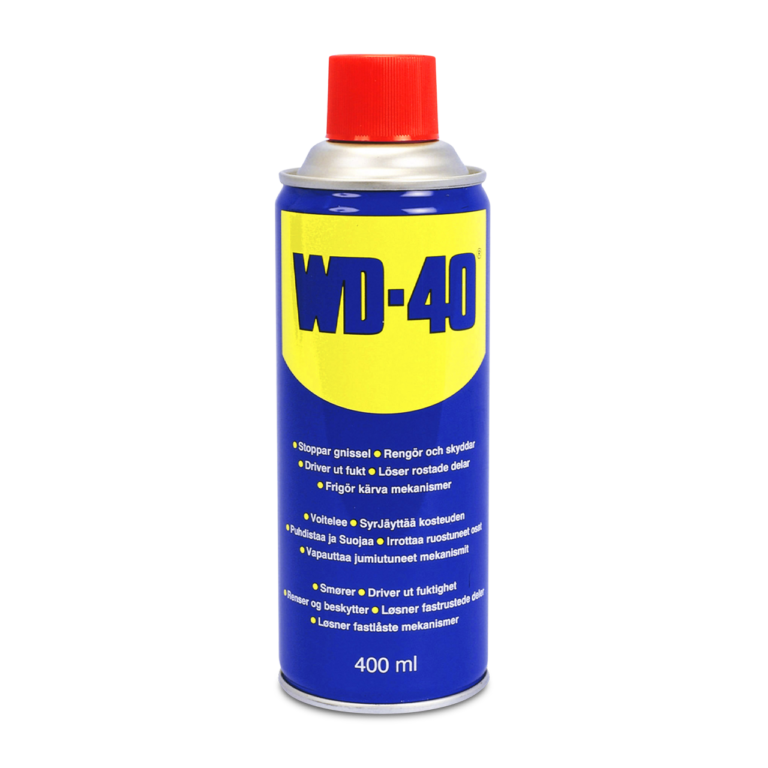
WD-40 The Icon in the Blue and Yellow Can: History and 20 Ways to Use It
If you walk into any garage, workshop, or under-the-sink cupboard across the globe, you are almost guaranteed to find one thing: The Can.
It’s blue and yellow icon with a bright red top. It has a distinct, almost comforting scent that immediately brings to mind fixed bicycles and silenced hinges. It is, of course, WD-40.
But that can isn’t just a household staple; it’s a piece of industrial history. It is a product born from aerospace technology that somehow became the ultimate hack for homeowners in over 176 countries.
Today, we are diving deep into the story of the original “Multi-Use Product”—leaving the specialized greases aside for a moment—to celebrate the classic blue and yellow can.
The Origin Story: The Missile and The 40th Try
The year was 1953. The Cold War was heating up, and the space race was on. In a small lab in California, the fledgling “Rocket Chemical Company” and its staff of three were trying to solve a major problem for an aerospace contractor. They were building the Atlas missile, but the missile’s stainless steel outer “skin” was paper-thin and incredibly delicate. It was also prone to rust and corrosion from the humidity and salt air before it could even launch. They needed a chemical that could protect it.
The team, led by chemist Norm Larsen, knew they needed something that would repel humidity—something that would literally displace water. They tried a formula. It failed. They tried ten more. They failed. They tried thirty more. They all failed. They didn’t give up. Finally, on their 40th attempt, they concocted a formula that worked perfectly. They called it—with literal precision—Water Displacement, 40th Formula.
https://wd40company.com/our-company/our-history/
The Evolution: From Rockets to Retail
For the first few years, WD-40 was strictly industrial military-grade stuff. It was used exclusively to protect the missile skin against rust and corrosion. But then, something interesting happened at the factory. The employees started sneaking cans home in their lunchboxes. They realized this “water displacer” was incredible at solving everyday annoyances. It stopped squeaky doors in their homes. It loosened stuck bolts on their cars. It cleaned gunk off their tools.
By 1958, the company realized they were sitting on a goldmine. They began packaging WD-40 into aerosol cans for the consumer market. It was such a success that by 1969, the Rocket Chemical Company bowed to the inevitable and officially renamed itself after its only product: The WD-40 Company.
The War on the Red Straw
For decades, the biggest problem with WD-40 wasn’t the product; it was the packaging. You needed that tiny red straw to get a precise stream, but that straw was impossible to keep track of. It was taped to the side of the can until you used it once, after which it vanished into another dimension.
The evolution of the can culminated in the mid-2000s with the invention of the “Smart Straw”—a permanently attached, flip-up straw nozzle. It is perhaps one of the greatest packaging innovations in DIY history.
What is it, Really?
Before we get to the uses, it’s crucial to remember what the blue and yellow can is and isn’t.
- IT IS a solvent. It is incredible at dissolving gunk, sticky residue, and grease.
- IT IS a water displacer. It gets under moisture and pushes it away.
- IT IS a rust preventative. It leaves a light oily film that blocks oxygen.
- IT IS NOT a long-term lubricant. While it lubricates temporarily, it dries out relatively quickly. (Don’t use it on your bike chain for a long ride!)
https://media.wd40.asia/app/uploads/2025/11/17153405/MUP-TDS-ASIA-25.pdf
The Essential List: 20 Key Uses for the Blue & Yellow Can
While the company famously lists over 2,000 uses, these 20 are the essential, highly effective applications that define the classic Multi-Use Product.
The Cleaners & Dissolvers
Because it’s a solvent, it melts sticky stuff like magic.
- Sticker Shock: The ultimate cure for price tag residue on glass, wood, or ceramics. Spray, wait a minute, wipe clean. (Note: See the warning below regarding clear plastics).
- Tar and Insect Splatter: Melts road tar and dried insects right off your car’s front bumper/fender and grille without damaging the paint.
- Crayon Mural Removal: Did the kids draw on a painted wall? A light spritz on a rag usually wipes the wax crayon right off (test a small spot first!).
- Chewing Gum stuck in Carpet or Hair: Don’t cut it out! WD-40 dissolves the gum base, allowing it to be combed or brushed out easily.
- Scuff Marks on Floors: Removes black rubber heel marks from kitchen, vinyl, or laminate flooring with ease. (Warning: Clean this area thoroughly with soap afterwards—it will be incredibly slippery!)
- Adhesive Tape Residue: Cleans up the sticky mess left behind after pulling up old duct tape, masking tape, or packing tape.
The Rust & Water Fighters
Returning to its original 1953 purpose.
- The Wet Spark Plug Fix: If your lawnmower or older car won’t start on a humid day, spray the spark plug wire boot to displace the moisture causing the short.
- Winterizing Garden Tools: Before storing shovels and trowels for the off-season, clean them and spray them down to prevent rust until next year.
- Protecting Saw Blades: Wipe down hand saws and circular saw blades after use to prevent pitting rust and keep tree sap from sticking.
- The Snow Shovel Hack: If you live in a cold climate, spray your shovel blade before heading out in a storm. The heavy, wet snow will slide right off instead of sticking.
- Cleaning Battery Terminals: Use it to clean off that corrosion on car battery posts and protect them from future buildup.
The Penetrators & Looseners
Getting into tight spaces to free things up.
- Rusted Nuts and Bolts: Spray it on a frozen fastener and let it sit for 10 minutes. It creeps into the threads to break the rust bond.
- Stuck Zippers: Use the straw to apply a tiny amount to the slider of a stubborn metal zipper on a jacket, tent, or sleeping bag.
- Stuck Glassware: Two glasses stuck together after washing? Spray the seam where they meet; the oil penetrates and helps them glide apart without breaking.
- Removing Tight Rings: If humidity or heat made your hands swell, a quick spray is slicker than soap for getting a ring off a finger.
- Untangling Jewelry Chains: A small spritz on a knotted silver or gold chain helps the links slide past each other so you can untangle it with a pin.
The Quick-Fix Lubricants
For light duty, immediate squeak relief.
- The Classic Squeaky Door Hinge: The noise that launched a million cans. It stops the squeak instantly.
- Sticky Drawers: Spray a little on the runners of older wooden drawers that stick when humidity is high.
- Noisy Office Chairs: Find the squeaky caster wheel or pivot point under your office chair and give it a blast.
- Stiff Garden Shears: When pruning shears (secateurs) get gummed up with sap and are hard to close, WD-40 cleans the sap and lubes the pivot point in one go.
⚠️ Read Before You Spray: The Safety Fine Print
As useful as the “Blue Can” is, it is strong chemistry. To keep your belongings (and yourself) safe, keep these three rules in mind:
The “Clear Plastic” Rule
WD-40 is a solvent. While it is safe on metal, wood, and most hard plastics, it can damage Polycarbonate (clear hard plastic like safety goggles or dashboard clusters) and Polystyrene (Styrofoam). It can cause clear plastic to cloud or crack (“craze”) and will melt Styrofoam instantly. Always test a hidden spot first.
The “Slip” Hazard
The “W” in WD-40 could stand for “Whoops.” If you spray this on a tile, vinyl, or timber floor to clean a scuff mark, you have created an invisible ice rink. You must wash the area with hot soapy water immediately after, or you will slip.
The “Electronics” Caution
While WD-40 is non-conductive and great for spark plugs, do not spray it inside sensitive electronics (like your mobile phone or laptop). The residue attracts dust, which can cause overheating later. For computers, use specialized “Contact Cleaner.”
Whatever the job, if it’s stuck, squeaky, or sticky, the smart money is on grabbing the blue and yellow can first—just remember to aim carefully! Here’s to another 70 years of the world’s most useful mistake.